Research
Controlled Polymerizations
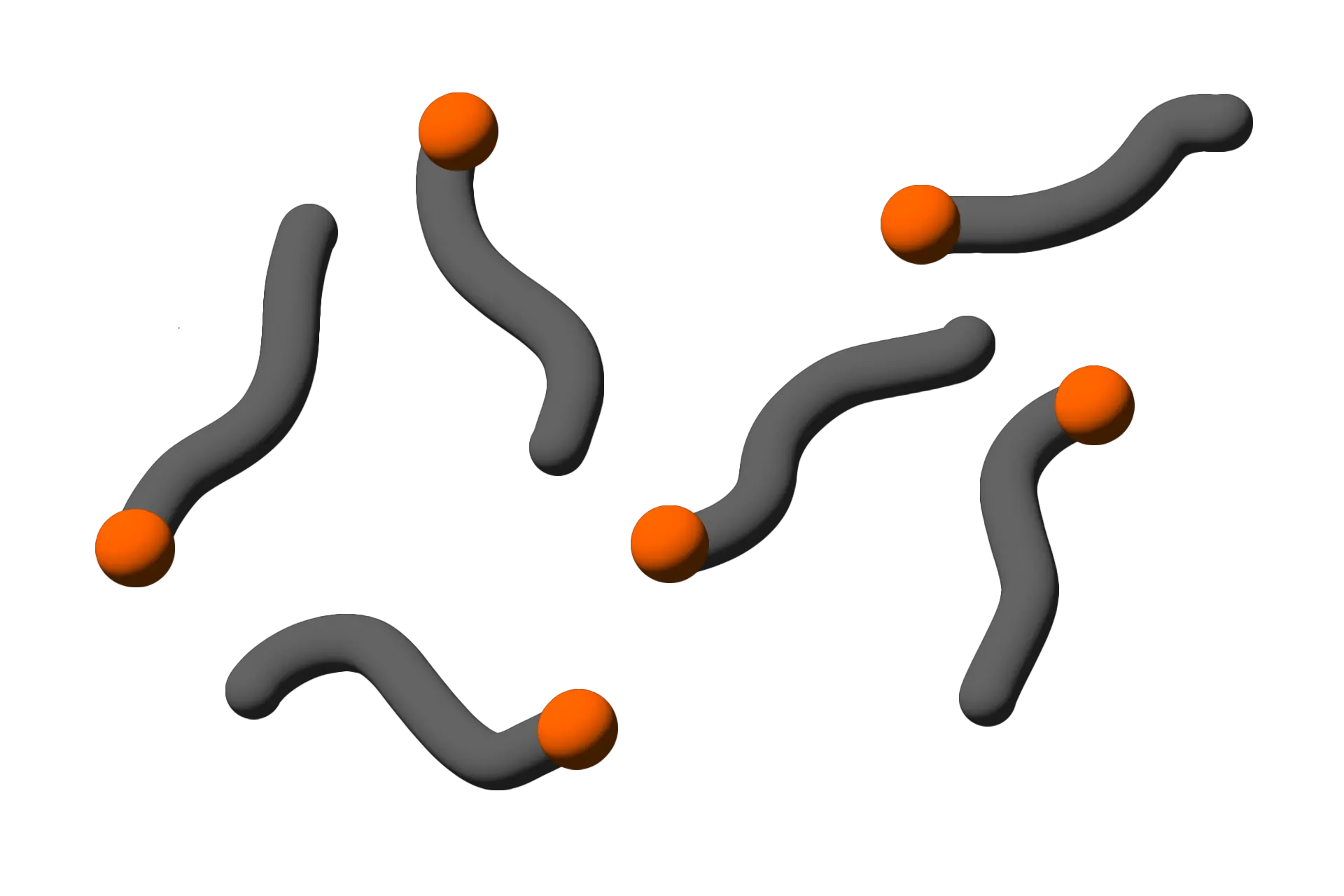
Chain-grwoth polymerizations have the possibility of being transformed into "controlled polymerizations" (sometimes called "living", "quasiliving", "immortal" and more) by precisely controlling the initiation and termination of the polymerization. Controlled polymerizations take many forms (living anionic/cationic, reversible-deactivation radical polymerization, ring opening metathesis to name a few). Hallmarks of a controlled polymerization include low dispersity products with well defined ⍺ and ⍵ groups, which yield superior mechanical properties as well as the possibility of future chain-end chemical transformations. My research interests lay in preparing well-defined inorganic polymers by developing methods for controlled initiation and termination of the ring-opening polymerization of inorganic heterocycles. Controlled polymerization techniques for inorganic polymers open the door for inorganic polymers with complex molecular architecture.
Polymer Architecture
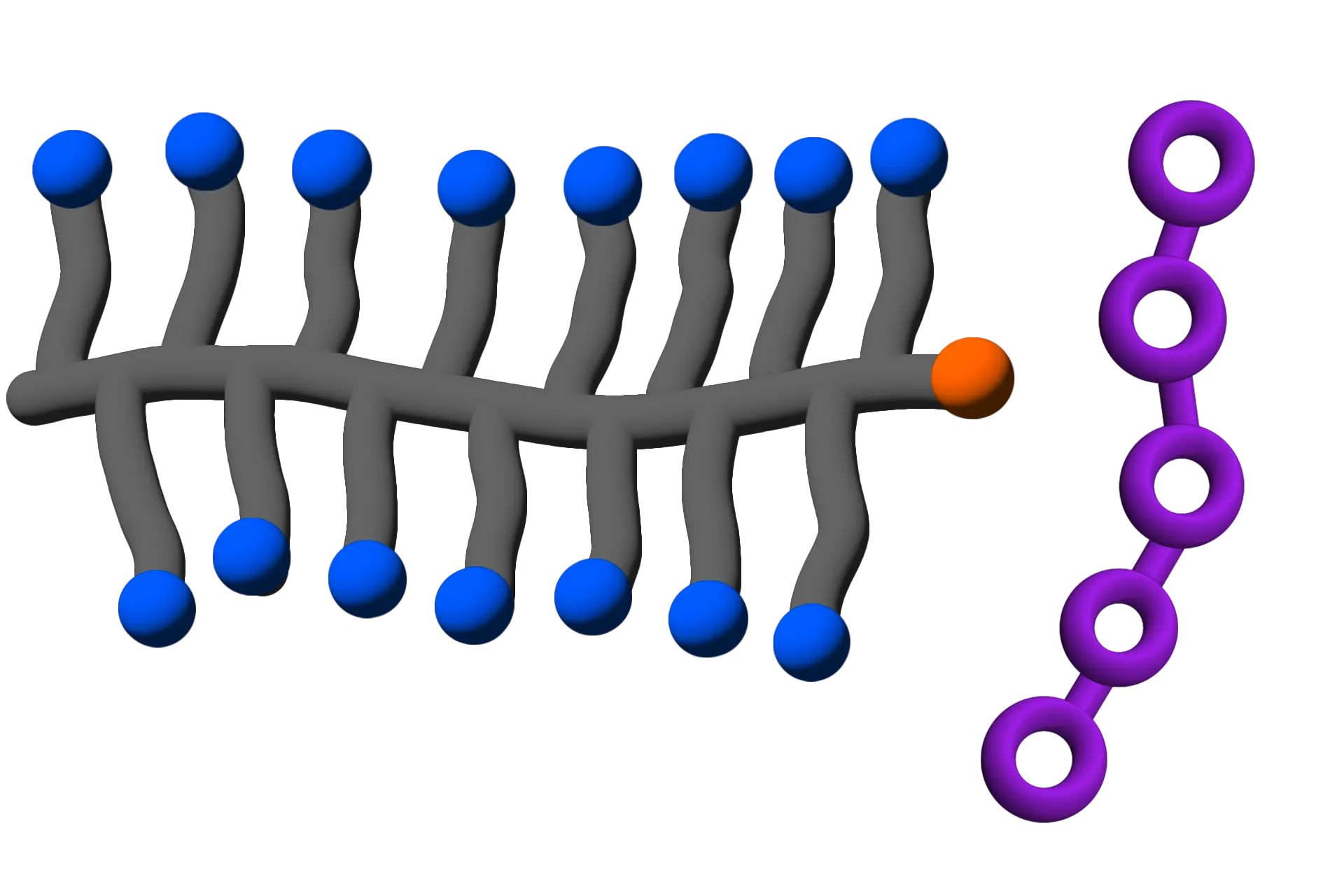
Macromolecules do not have to be simple homopolymer linear chains. Many more sophisticated architectures have been described in the literature such as block, dendritic, and comb polymers. Bulk material properties are heavily dependent on molecular architecture, and this has been exploited to devise tough resins (block polymers), viscosity modifying additives (comb polymers), and soft solvent-free elastomers (bottlebrush polymers).
Self-Assembly
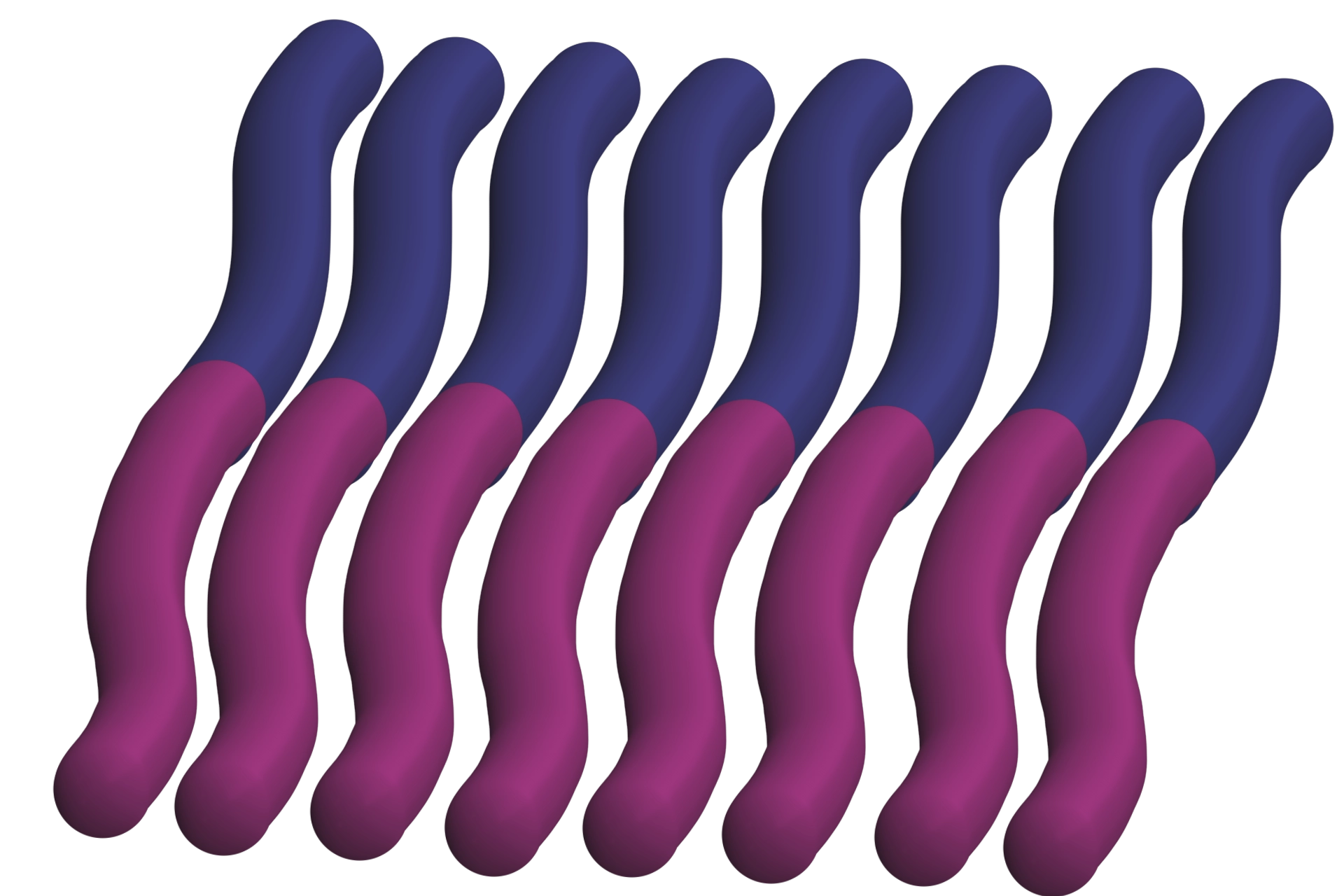
Much like how oil and water spontaneously separate, copolymers with covalently bound homopolymer blocks will spontaneously phase-separate into distinct nanoscale domains, one rich in block A and another rich in block B. This phase separation gives rise to new material properties, and can be exploited for next-generation photoresists. Of particular interest are block polymers containing poly(stannane)/(telluoxane) segments, which have high EUV absorption cross sections. These blocks decompose when exposed to EUV light, and can then be washed away to reveal the underlying wafer. Inorganic block polymers have the potential to upend microchip manufacturing by both improving chip yields as well as doing away with lithography masks and expensive light sources.